MOP fertilizer is muriate of potash, the trade name for potassium chloride (KCl). It is the red or white granular potash that most dealers in India sell simply as "potash". MOP carries 60% potash (K2O), so one 50 kg bag gives the crop about 30 kg of potash.
What is MOP in fertilizer?
MOP stands for Muriate Of Potash. "Muriate" is an old word for chloride (hydrochloric acid was once called muriatic acid), so muriate of potash simply means potassium chloride. In NPK notation MOP is a 0:0:60 fertilizer: no nitrogen, no phosphorus and 60% potash.
Because it supplies only one major nutrient, MOP is called a straight potash fertilizer. Farmers usually apply it alongside a nitrogen source such as urea and a phosphate source such as DAP or SSP, or use it to top up the potash in an NPK complex.
What MOP contains: the FCO specification
MOP sold in India has to meet the specification in the Fertiliser (Control) Order, 1985. These are the limits used in government MOP import tenders that follow the FCO:
| Parameter | Limit |
|---|---|
| Water-soluble potash (as K2O), % by weight | 60% minimum |
| Moisture, % by weight | 0.5% maximum |
| Sodium as NaCl (dry basis), % by weight | 3.5% maximum |
| Particle size | At least 65% between 0.25 mm and 1.7 mm |
The rest of the bag is mostly chloride. MOP is about 47% chloride by weight, which is the main thing to keep in mind when you choose it for a crop. The guaranteed analysis is printed on every bag, so check it at the dealer counter.
Red MOP and white MOP
Both are potassium chloride with the same 60% K2O. Red or pink MOP gets its colour from traces of iron oxide in the ore. White MOP has been refined further and is almost pure potassium chloride.
For broadcasting on the soil, the two do the same job. For drip irrigation the iron oxide in red MOP does not dissolve and can block emitters, so drip growers use white MOP or a water-soluble potash such as potassium nitrate 13:0:45 or SOP 0:0:50.
Where MOP comes from
MOP is mined from underground potash ore, then crushed, separated from salt and clay, and dried. India does not mine potash commercially, so the country imports all the MOP it uses, about 4 million tonnes a year according to government statements from 2022 and 2023. The main suppliers include Canada, Russia, Belarus, Israel and Jordan. Canada alone supplies about a quarter, according to the fertilizer minister in January 2026.
That import dependence is why MOP prices in India move with world potash prices and shipping costs. It is also why the government promotes potash made in India, such as PDM (potash derived from molasses), which is recovered from sugar industry molasses.
What MOP does for the crop
Potassium does not build the plant the way nitrogen does. It keeps the plant working:
- It moves sugars from the leaves into grain, fruit and tubers, so it decides how well the crop fills.
- It controls the pores on the leaf, so a crop with enough potash loses less water on hot afternoons.
- It strengthens stems and cell walls, which helps against lodging and some diseases.
- It improves quality: sugar content in cane, size and colour in fruit, and shelf life after harvest.
Potash shortage shows first on the older leaves, which turn yellow and then brown along the edges and tips.
How much MOP to apply
Potash recommendations from soil test labs and agricultural universities are given in kg of K2O. To convert them into MOP, divide by 0.6.
- A recommendation of 60 kg K2O per hectare needs 100 kg of MOP per hectare, which is two 50 kg bags.
- Per acre, the same rate is 24 kg K2O, or 40 kg of MOP.
Use the dose your soil test or local agriculture department gives for your crop. A few practical points:
- For most short-duration crops, apply the full MOP dose as a basal dose at sowing or transplanting, mixed into the soil.
- For long-duration crops and on light, sandy soils, split it: part as basal and part as a top dressing before flowering. In sugarcane, the second split usually goes in at earthing up.
- MOP has a high salt index. Keep it from touching seeds directly, or it can damage germination.
When MOP is not the right potash
For many field crops, the chloride in MOP is not a problem at normal doses. It becomes one in three situations:
- Chloride-sensitive crops. Tobacco is the clearest case, because chloride spoils how the leaf burns. Grapes, potato and many fruits and vegetables also do better on a chloride-free potash, especially at high doses.
- Saline soils or salty borewell water. Extra chloride adds to the salt the crop already has to cope with.
- Drip and foliar feeding. Red MOP does not dissolve fully, and the chloride can scorch leaves when sprayed.
In these cases, choose one of the chloride-free sources below.
| Potash source | K2O | Chloride | What else it brings | Best used for |
|---|---|---|---|---|
| MOP (muriate of potash) | 60% | About 47% | Nothing else | Basal potash on tolerant field crops |
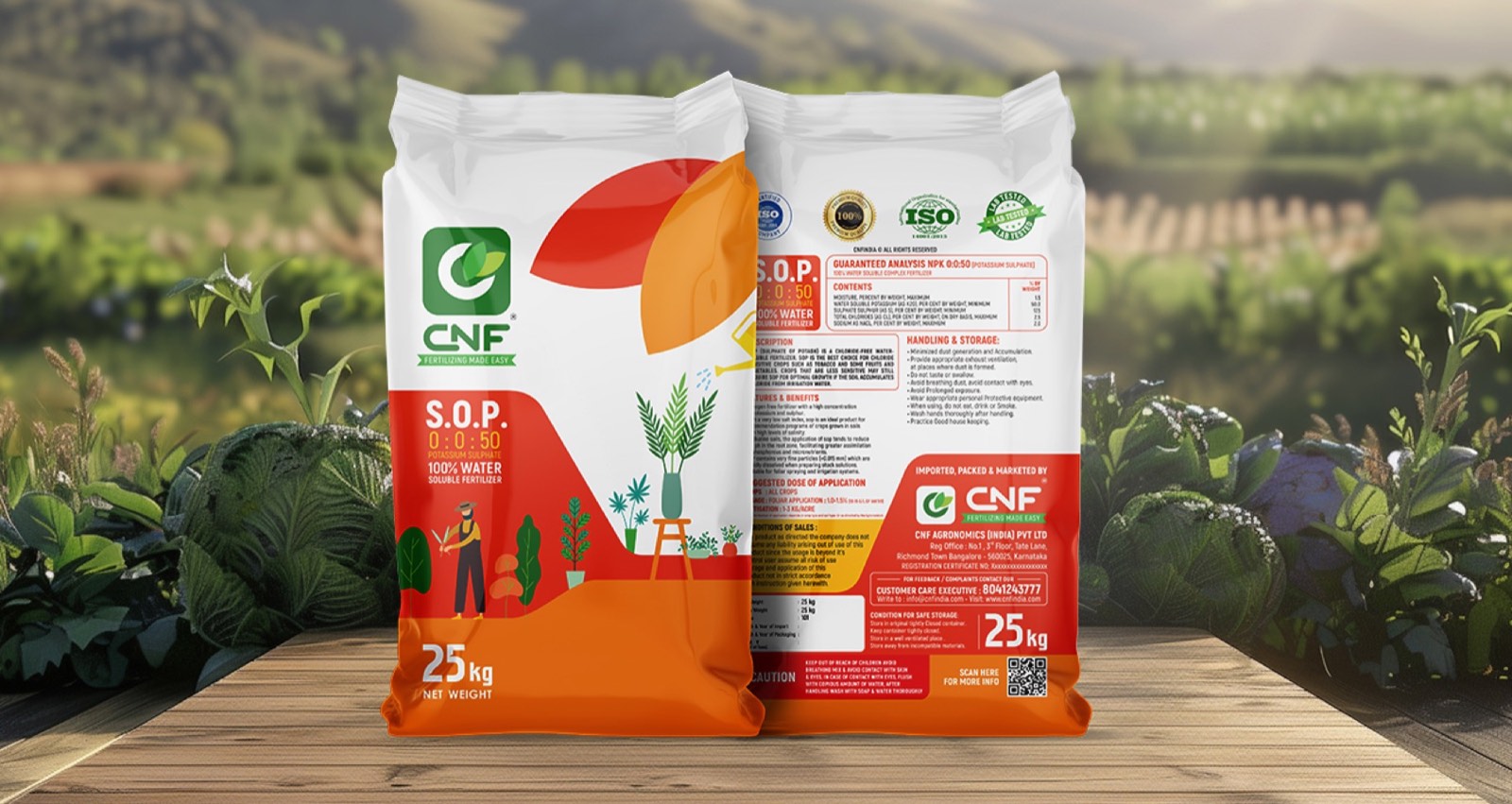
| SOP 0:0:50 | 50% | Chloride-free | 17.5% sulphur | Tobacco, fruit, saline soils, drip |
| Potassium nitrate 13:0:45 | 45% | Chloride-free | 13% nitrate nitrogen | Drip and foliar, flowering to fruit fill |
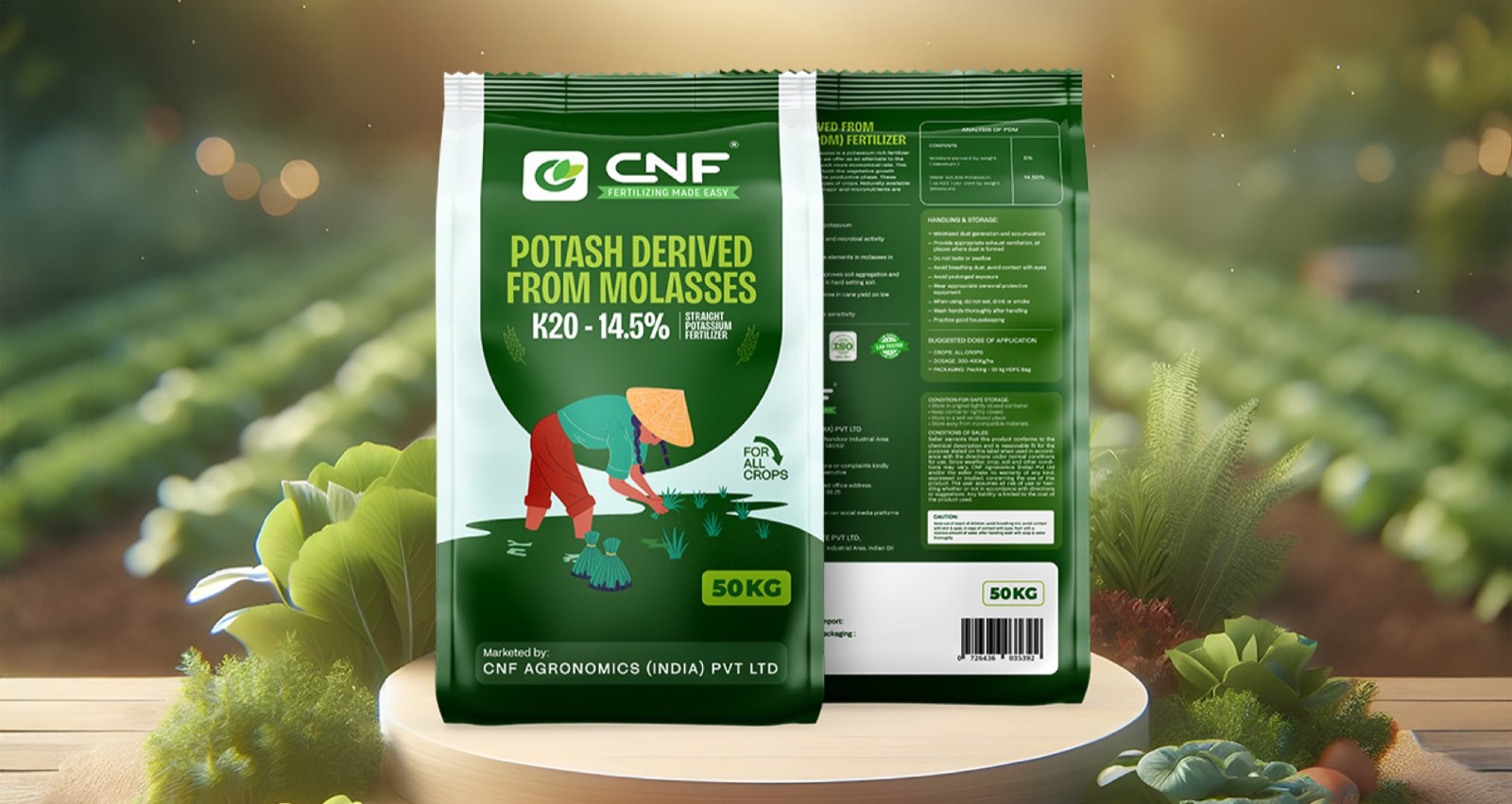
| PDM 14.5% | 14.5% | Chloride-free | Organic matter | Basal potash on chloride-sensitive crops and low-carbon soils |
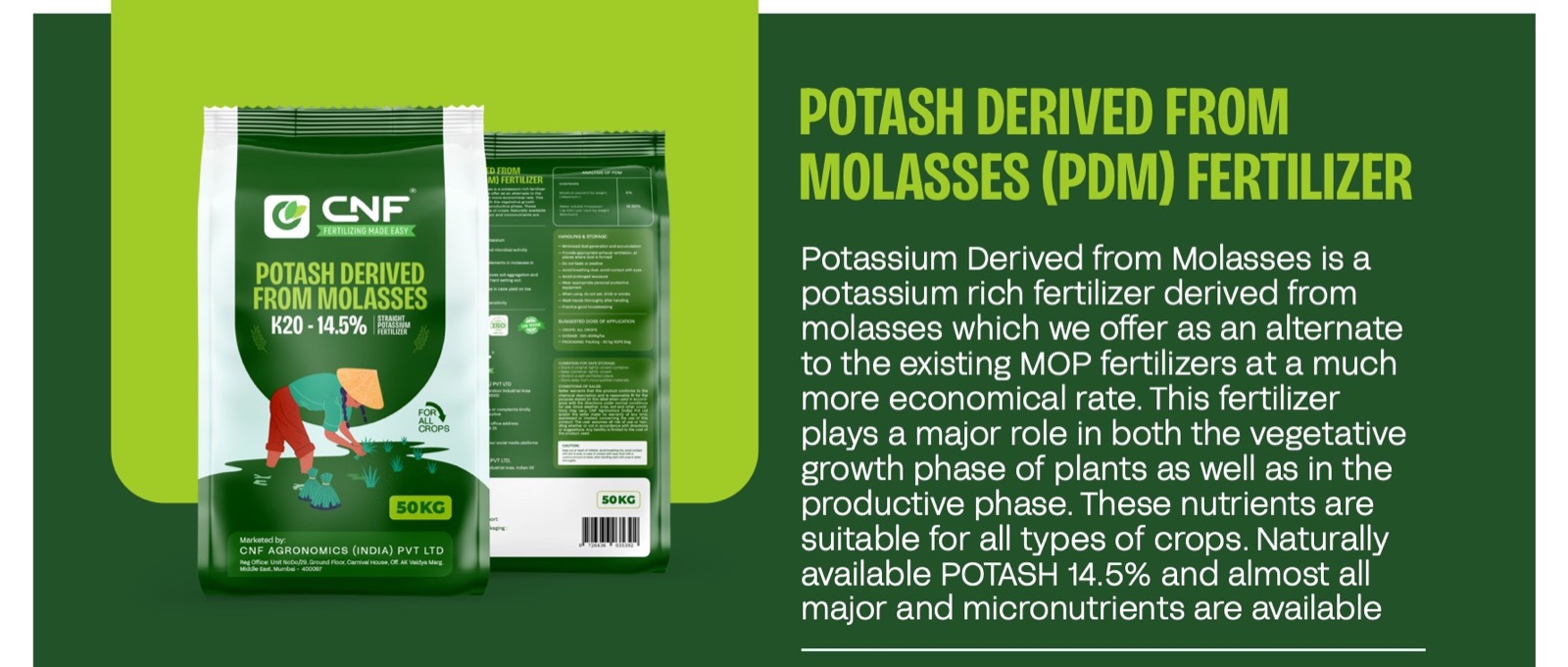
PDM carries less potash per bag than MOP, so compare the two on the cost of one kg of K2O, not the cost of one bag. Our guide PDM or MOP? Choosing a potash fertilizer for your crop walks through that sum.
MOP fertilizer price in India
MOP is sold under the Nutrient Based Subsidy scheme, so each company sets the MRP printed on its bags and there is no single fixed price for the country. In a reply on the fertilizer sector, the government put the average retail price of MOP in 2025-26 at ₹1,710.54 per 50 kg bag.
At that price, one kg of potash from MOP costs about ₹57 (₹1,710 ÷ 30 kg K2O). Use the same sum to compare any other potash: divide the bag price by the kg of K2O in the bag. Always check the MRP on the bag you buy, because it changes with import costs.
Quick answers
Is MOP the same as potash?
MOP is one kind of potash. "Potash" is the general name for fertilizers that supply potassium. MOP, SOP, potassium nitrate and PDM are all potash fertilizers.
Is MOP 0-0-60?
Yes. MOP has no nitrogen and no phosphorus, and at least 60% K2O.
Is MOP an organic fertilizer?
No. MOP is a mined mineral salt. If you want potash that also adds organic matter, PDM is one option.
A note from CNF
CNF does not sell MOP. We make PDM 14.5% at our plant in Karnataka and supply SOP and potassium nitrate for chloride-sensitive crops and drip. If you are not sure which potash suits your crop and soil, send us your soil test report and our team will suggest one.