Why magnesium sulphate
Magnesium sits at the centre of the chlorophyll molecule, so a crop short of it cannot make full use of sunlight. The first sign is yellowing between the veins of older leaves while the veins stay green. Sandy, acidic and heavily cropped soils, and fields that get a lot of potash, run short most often.
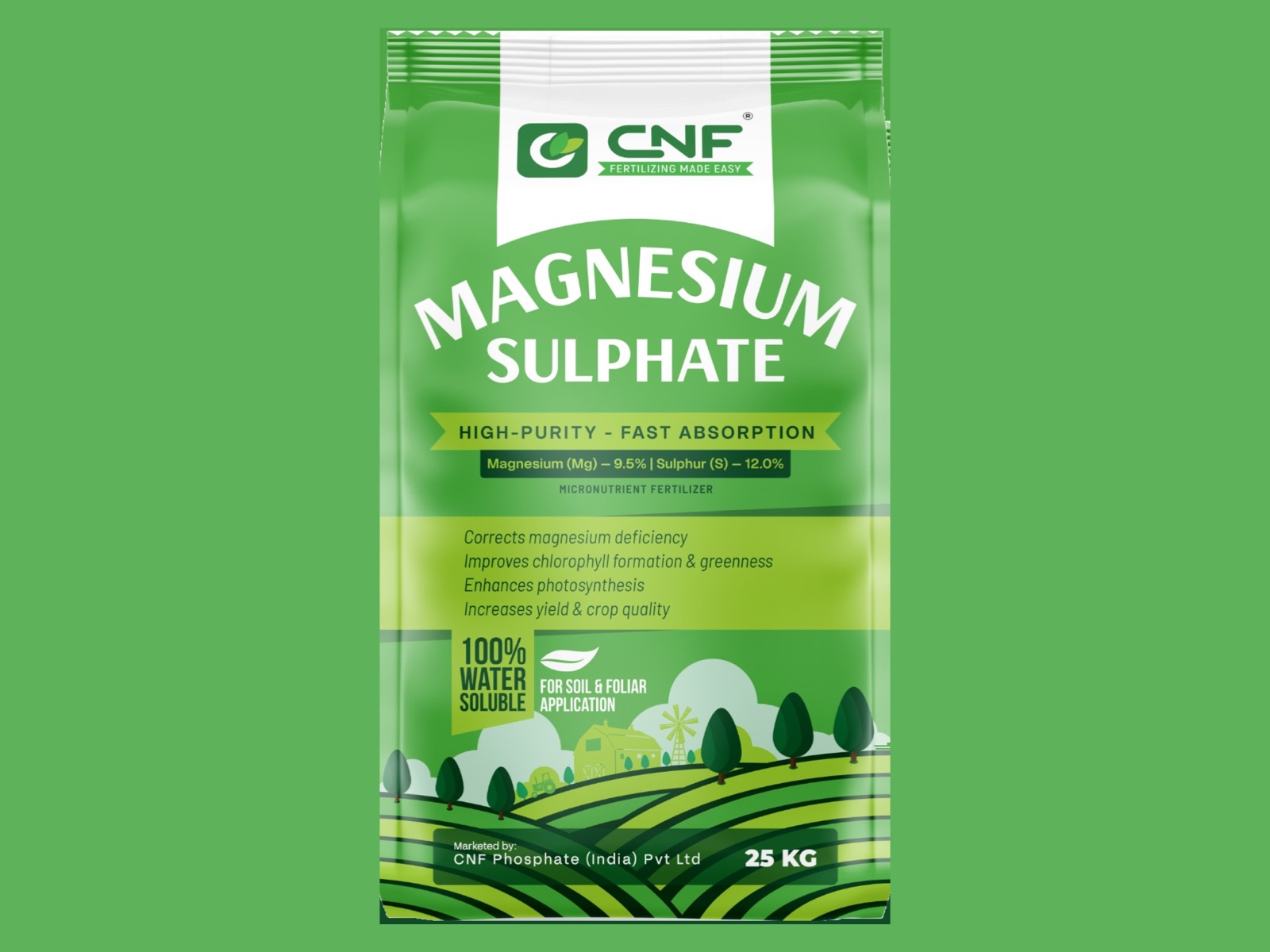
CNF Magnesium Sulphate supplies magnesium and sulphate sulphur together, in a form that dissolves in water and reaches the root zone or the leaf quickly.
- Supports chlorophyll formation and greener foliage.
- Helps correct magnesium deficiency.
- Supplies sulphur, which the crop needs to build proteins.
- Supports photosynthesis and enzyme activity.
- One grade for soil application, fertigation and foliar spray.
How to apply
- Soil: 10–25 kg per acre. Broadcast evenly or place along the rows, and mix into the soil before irrigation.
- Fertigation: 5–10 kg per acre. Dissolve in water and run through the drip system.
- Foliar spray: 5–10 g per litre of water (a 0.5–1.0% solution). Spray evenly on the leaves in the cooler part of the day.
Rates are from the product label. Adjust them to the crop, its growth stage, the soil and how severe the deficiency is, and follow your agronomist's advice.
Magnesium sulphate mixes with most water-soluble fertilizers and with nitrogen and potash fertilizers. Do not mix it with calcium-based products or highly alkaline solutions, and do a jar test before tank mixing.
Questions about Magnesium Sulphate
What are the signs of magnesium deficiency?
Older, lower leaves turn yellow between the veins while the veins stay green. In severe cases the yellow patches turn reddish or brown and the leaves drop early.
Can magnesium sulphate be mixed with other fertilizers?
Yes, with most water-soluble fertilizers and with nitrogen and potash fertilizers. Do not mix it with calcium nitrate or other calcium-based products, or with highly alkaline solutions. Do a jar test before tank mixing.
How much magnesium sulphate should I spray?
5–10 g per litre of water, which is a 0.5–1.0% solution. Spray in the cooler part of the day for better absorption.