Why growers use urea phosphate
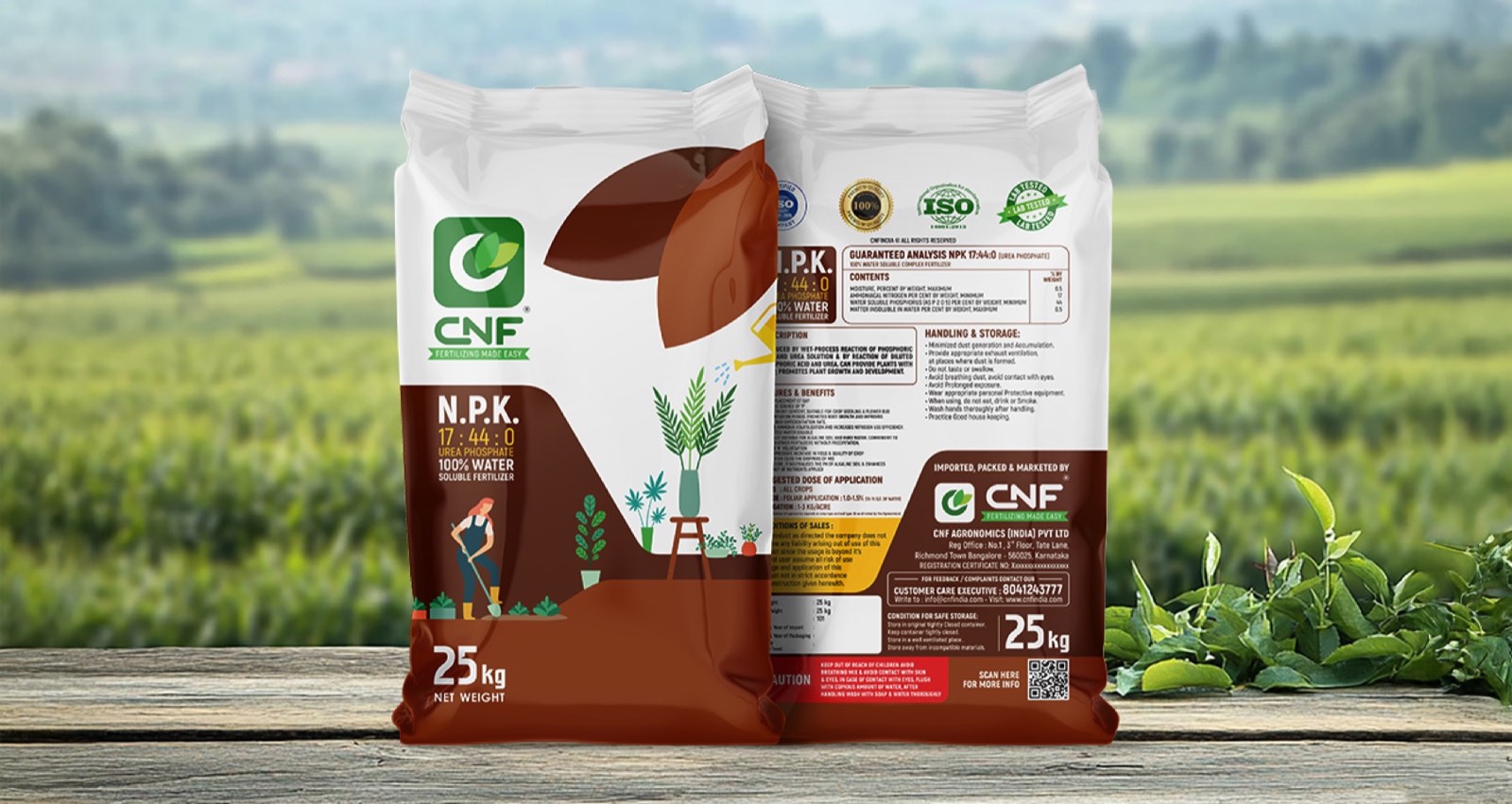
Urea phosphate is made by reacting phosphoric acid with urea. The result is a crystal that dissolves completely and is acidic in solution. On alkaline soils and with hard irrigation water, that acidity is useful: it keeps phosphorus available to the plant instead of letting it lock up with calcium.
- An economical source of phosphorus and a common replacement for DAP in fertigation.
- Supports root growth and flower bud formation at the seedling and pre-flowering stages.
- Reduces ammonia loss, so more of the nitrogen reaches the crop.
- Mixes with other fertilizers without forming a precipitate.
- Helps clear salt deposits from drippers in micro-irrigation systems.
Questions about Urea Phosphate 17:44:0
Can urea phosphate replace DAP?
In drip and foliar programmes, yes. It supplies nitrogen and phosphorus in a fully soluble, acidic form.
Is urea phosphate good for alkaline soil?
Yes. Its acidity lowers pH near the roots and keeps phosphorus and micronutrients available.