Water-soluble fertilizers dissolve completely in water, so they can go through a drip line or a sprayer without blocking it. They cost more per kg than granular fertilizer, but very little is wasted, and you can feed the crop in small doses exactly when it needs them.
Reading the numbers
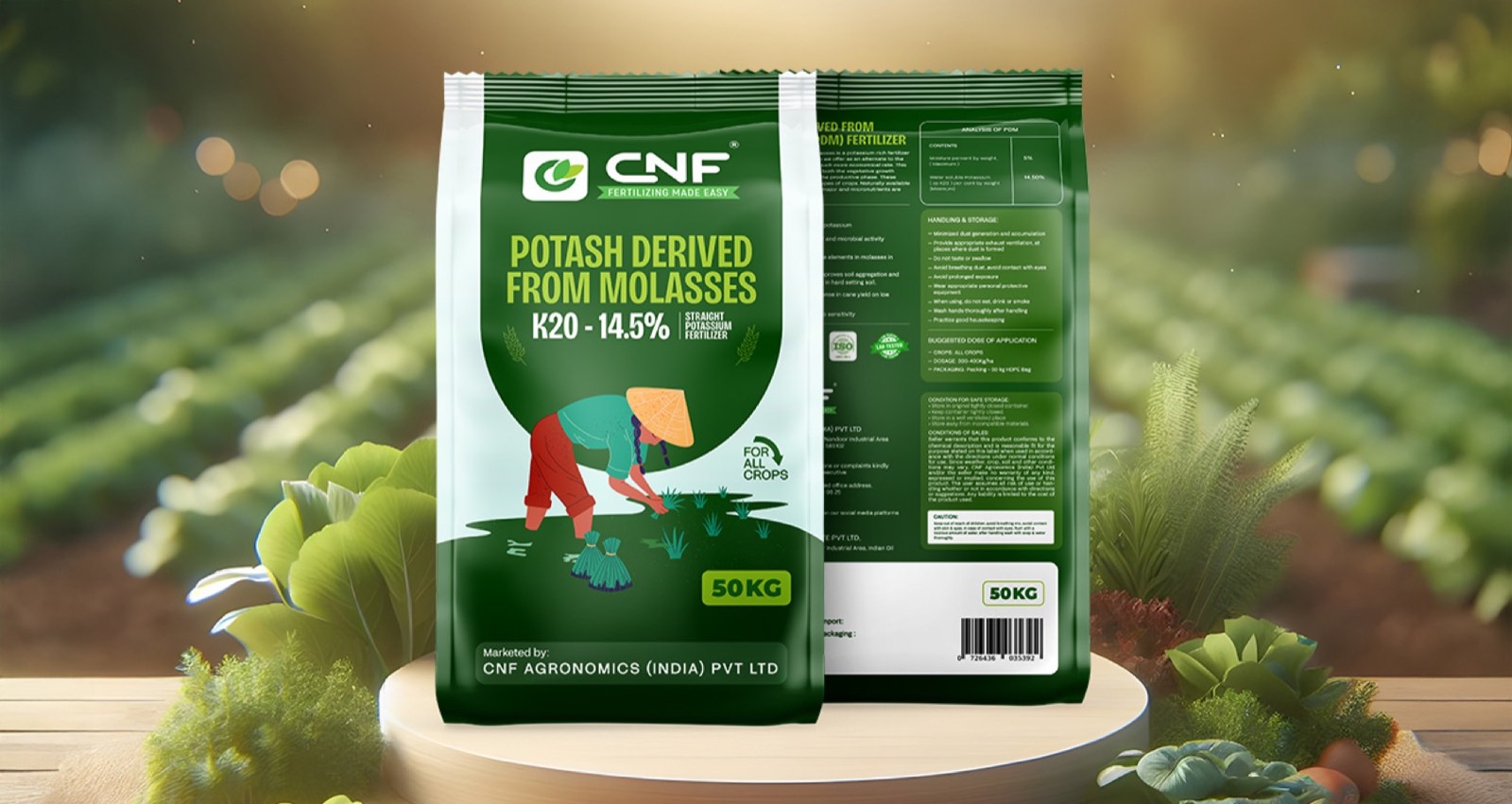
The three numbers are always nitrogen (N), phosphate (P2O5) and potash (K2O), in percent by weight. So 13:0:45 is 13% nitrogen, no phosphate and 45% potash.
Which grade at which stage
| Stage | What the crop needs | Common grades |
|---|---|---|
| Planting and early roots | Phosphorus | 12:61:0, 17:44:0 |
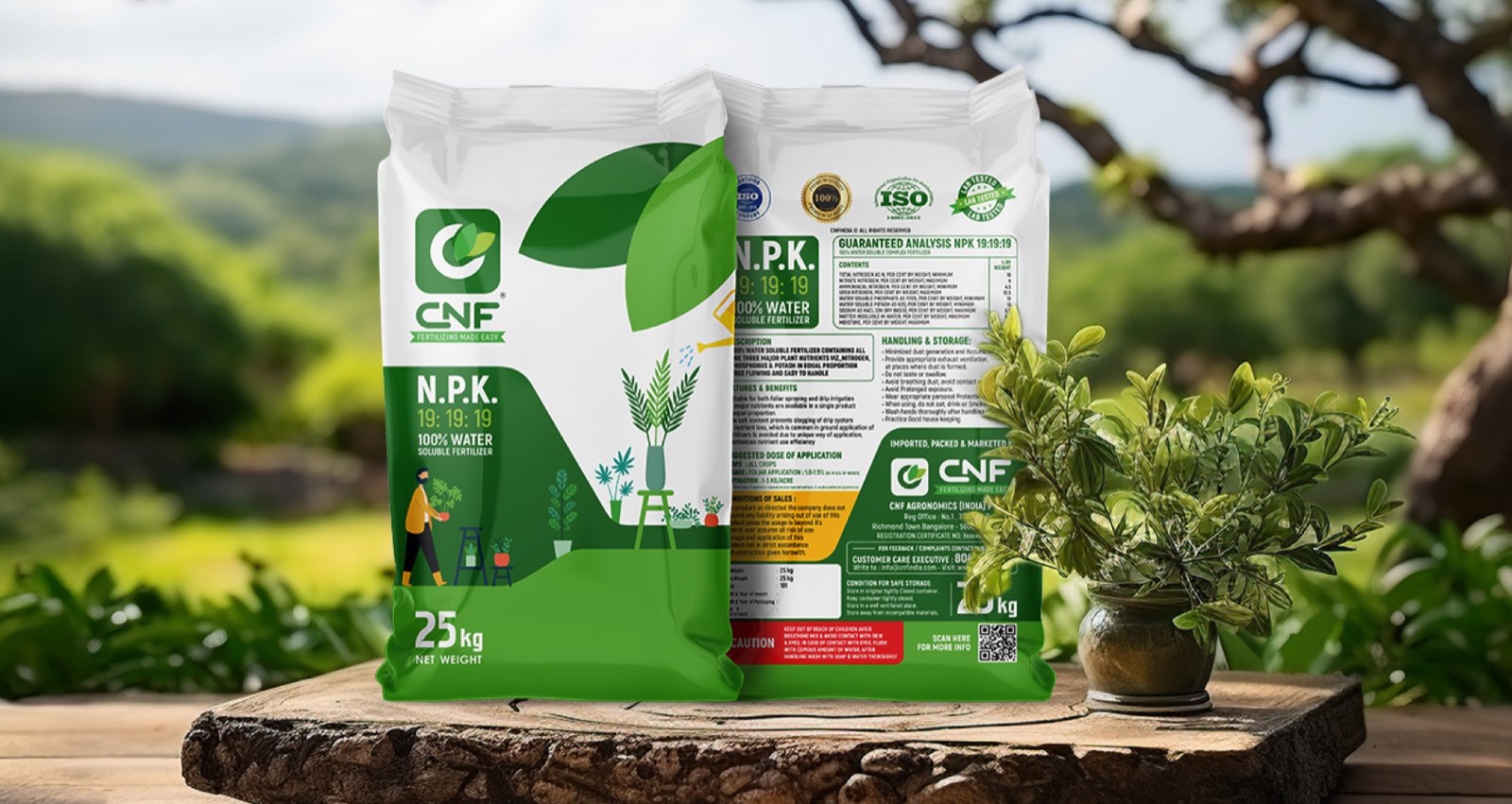
| Vegetative growth | Balanced N, P and K | 19:19:19 |
| Flowering and fruit set | Phosphorus and potash, less nitrogen | 0:52:34 |
| Fruit fill and colour | Potash | 13:0:45, 0:0:50 |
| Fruit firmness | Calcium | Calcium nitrate |
Four mistakes we see often
- Mixing calcium nitrate with phosphates or sulphates. They react and form a solid that blocks drippers. Run calcium on its own.
- Dumping powder straight into the tank. Dissolve it in a bucket first, then add it.
- Running fertilizer at the start of irrigation. Wet the root zone first, inject in the middle, and finish with plain water to flush the lines.
- Copying a neighbour's schedule. Soil, water and crop age differ. Ask for a schedule built for your field.
Hard or alkaline water
If your borewell water leaves white deposits, use acidic grades such as urea phosphate (17:44:0). They help keep phosphorus available and clean the emitters at the same time.
Our agronomy team can draw up a fertigation schedule for your crop. Send us the crop, its age and your water source.