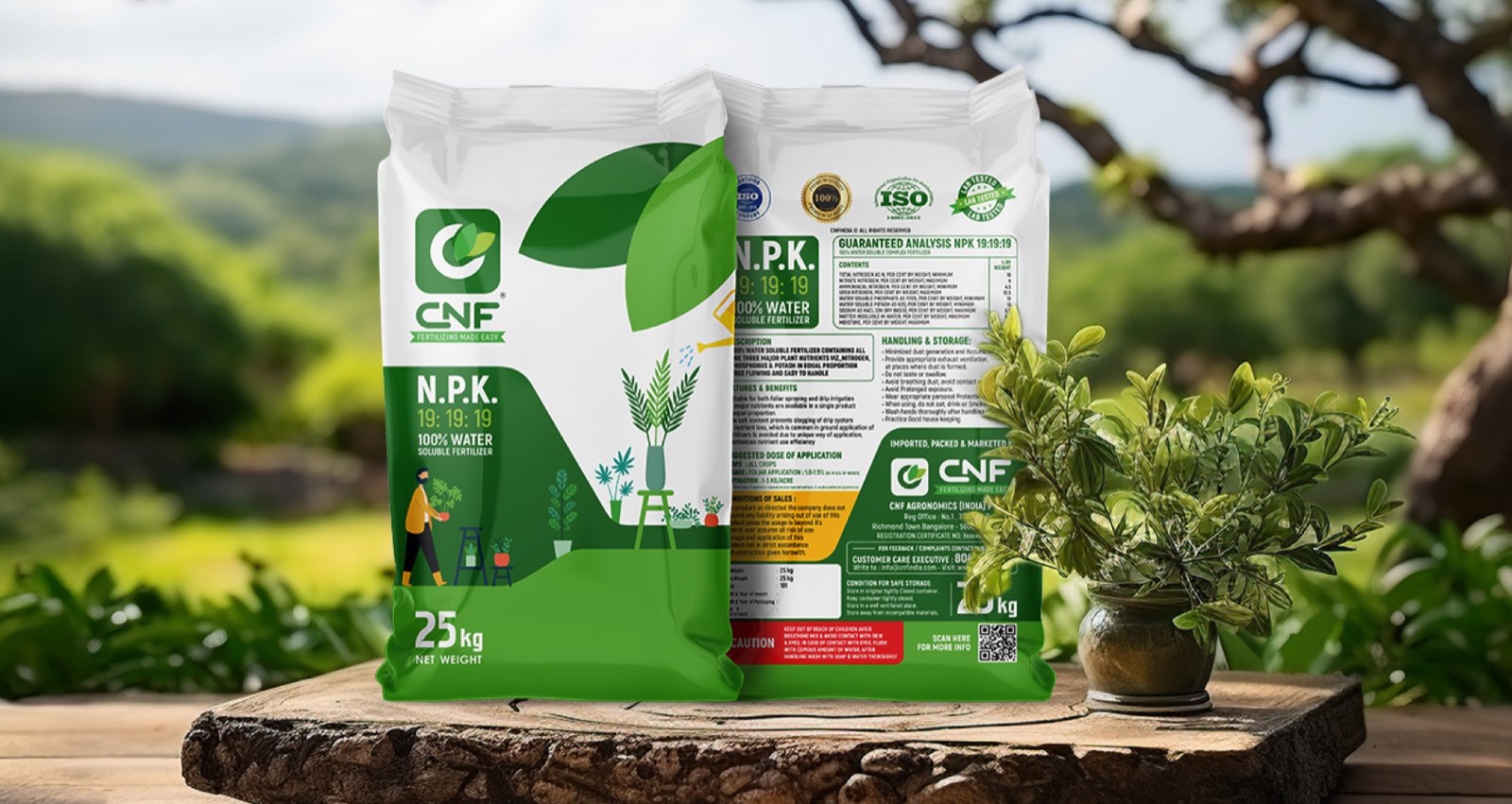

Every fertilizer bag in India prints three numbers. They tell you how much nitrogen (N), phosphate (P2O5) and potash (K2O) is inside, as a percentage of the bag's weight. A 50 kg bag of 19:19:19 holds 9.5 kg each of N, P2O5 and K2O.
What each nutrient does
- Nitrogen builds leaves and stems. Too little and the crop turns pale; too much and it grows soft, leafy and attracts pests.
- Phosphorus feeds roots, early growth and flowering. It moves very little in soil, so it has to be placed near the roots.
- Potash moves sugars into fruit and grain and helps the plant control water. Demand rises from flowering onward.
Matching ratio to stage
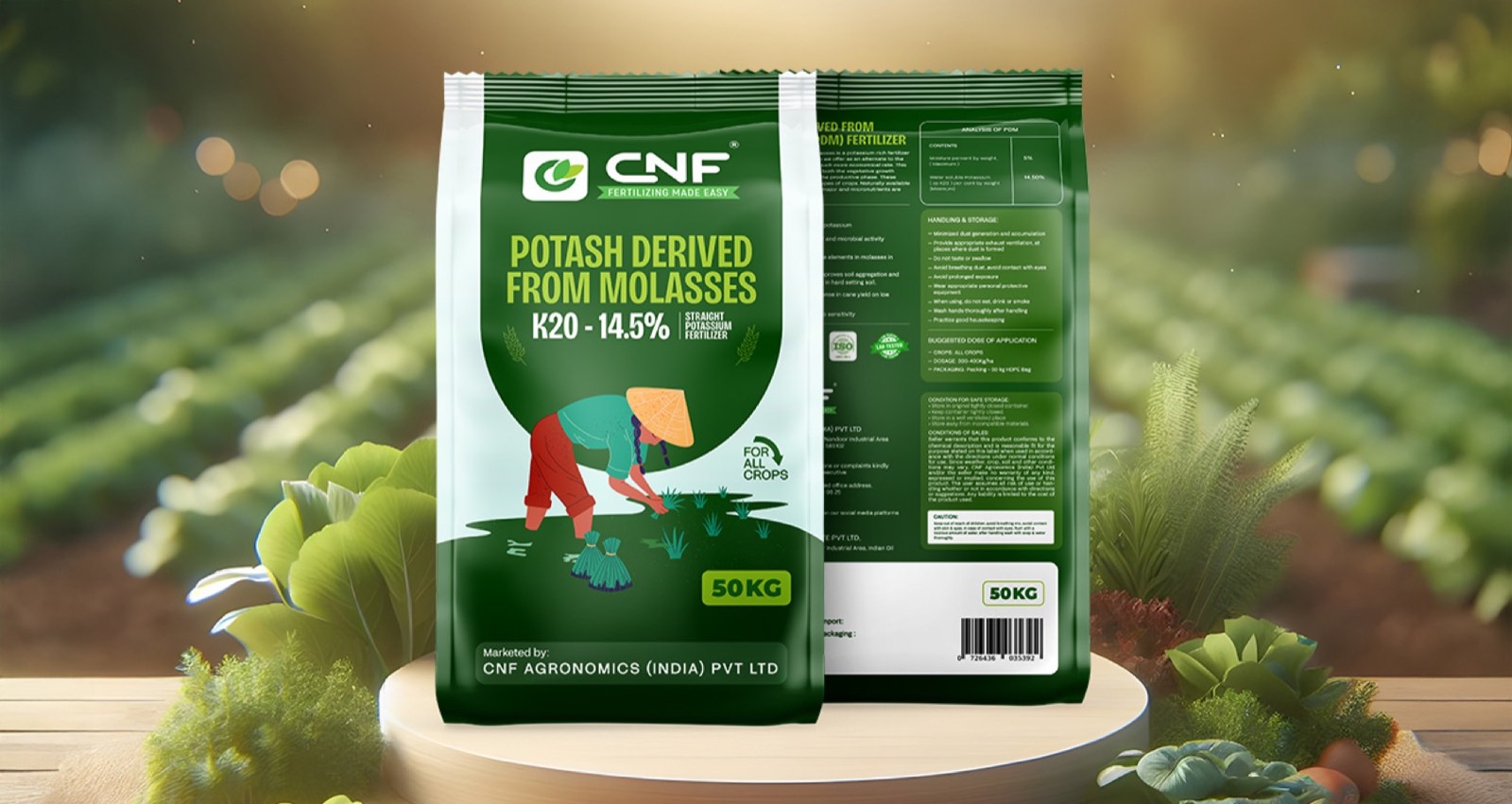
Early in the crop's life, phosphorus matters most: think 12:61:0 through drip, or PROM as a basal dose. In the growth phase, a balanced grade like 19:19:19 works. From flowering, cut nitrogen and lift potash: 0:52:34, then 13:0:45 or a potash basal such as PDM.
Start with a soil test
The right ratio for your field depends on what is already in the soil. A soil health card or a lab report costs little and tells you which nutrient is short. Bring it to your dealer or send it to us, and we will suggest a plan for your crop.